
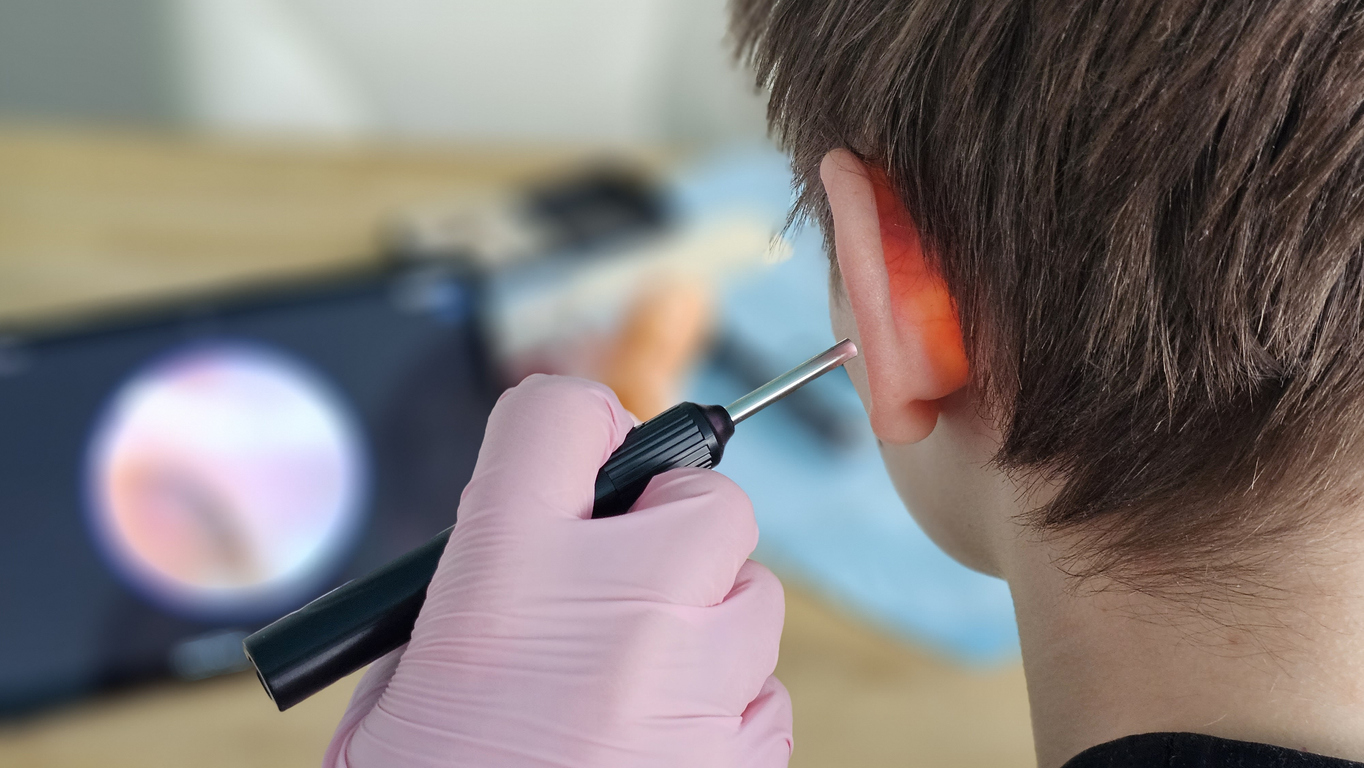
Blocked ears, muffled hearing or an uncomfortable feeling of fullness can interfere with everyday life. Sometimes, a build-up of earwax is responsible but these symptoms can have other causes, so an assessment is important before treatment.
Microsuction and water irrigation are two methods used by trained healthcare professionals to remove troublesome earwax. Understanding how they work can help you know what to expect.
Does earwax always need removing?
Earwax helps protect the ear canal from dirt and germs. It usually moves out naturally, so healthy ears do not need routine cleaning inside.
However, wax can sometimes accumulate and cause blockage, reduced hearing, discomfort or tinnitus. Wax-softening drops may help, while persistent or troublesome build-up may need professional removal.
A clinician may also recommend removal if wax prevents examination of the ear such as a routine hearing test.
At Pharmacy Cube we recommend the regular use of olive oil ear drops or spray to keep the ear lubricated for persistent wax problems. We also recommend using olive oil for 5 to 7 days prior to your ear wax removal appointment to ensure your wax is sufficiently softened prior.
What is microsuction?
Microsuction uses a fine suction tube to remove wax while the clinician views the ear canal using magnification. It does not involve flushing the ear with water.
This approach may be useful when irrigation is unsuitable, for example, in some people with a perforated eardrum or previous ear surgery. Your Pharmacist will conduct a short assessment questionnaire at your appointment to help decide which is the best treatment for you.
You may hear a loud suction noise during treatment. Although a painless procedure, some people experience discomfort, particularly when wax is hard and impacted or attached to the skin. Tell the clinician straight away if you feel uncomfortable during your treatment.
Possible side effects of microsuction include temporary dizziness, irritation or small grazes in the ear canal. Less commonly, tinnitus or changes in hearing can occur. These side effects are very rare and your Pharmacist will be on hand to answer any questions you may have.
What is water irrigation?
Water irrigation uses a controlled flow of warm water to loosen and flush wax from the ear canal. Wax-softening treatment is usually recommended beforehand.
Modern water irrigation is different from traditional manual ear syringing. NICE recommends water irrigation, microsuction or other suitable removal methods when performed by appropriately trained practitioners; manual syringing is not recommended.

Which method is right for you?
There is no single method that suits everyone. The choice depends on the condition of your ear, the wax itself, your medical history and previous ear wax removal experiences.
Before treatment, the Pharmacist will explore whether you have:
- Had ear surgery, grommets or an eardrum perforation
- Experienced recent pain, discharge or an ear infection
- Had problems with previous earwax removal
- Hearing in only one ear
- Tinnitus, dizziness or sensitivity to loud sounds
An assessment may lead to removal, advice on softening the wax, or referral for further care. Occasionally, for severe impactions, more than one appointment is needed to clear wax safely.
How should you prepare?
Ask the clinic whether you need wax-softening drops and how long to use them. Do not start drops without advice if you have a known or suspected perforated eardrum or a history of ear surgery.
Avoid cotton buds or other objects inside the ear, as these can push wax deeper and cause injury. Ear candles and home ear-vacuum devices have no proven benefit for removing wax.
When should you seek medical help?
Sudden hearing loss needs urgent medical assessment, do not assume it is earwax or wait for a routine removal appointment.
Request an urgent GP appointment or contact NHS 111.
Pain, bleeding, discharge, persistent dizziness or worsening hearing after treatment also need review. If hearing remains reduced after the wax has been cleared, further assessment may be necessary.
Speak to Pharmacy Cube
An ear assessment can help establish whether wax is causing your symptoms and which next step is appropriate. Speak to the Pharmacy Cube team to discuss your earwax concerns, explore suitable removal options and find out how to prepare for your appointment.
Contact Pharmacy Cube on 0203 662 0722 or email info@pharmacycube.co.uk.
This article provides general information and does not replace an individual clinical assessment. Treatment and supply are subject to suitability, prescription requirements and availability.
Registered with the General Pharmaceutical Council
GPhC Registration No: 9012289
Registered Owner: Cube Therapies Ltd
Superintendent Pharmacist: Mr Nasir Khan